Siri AI and the Evolution of Personal Computing
Sulav Jung Hamal - Blog - 2026/06/24
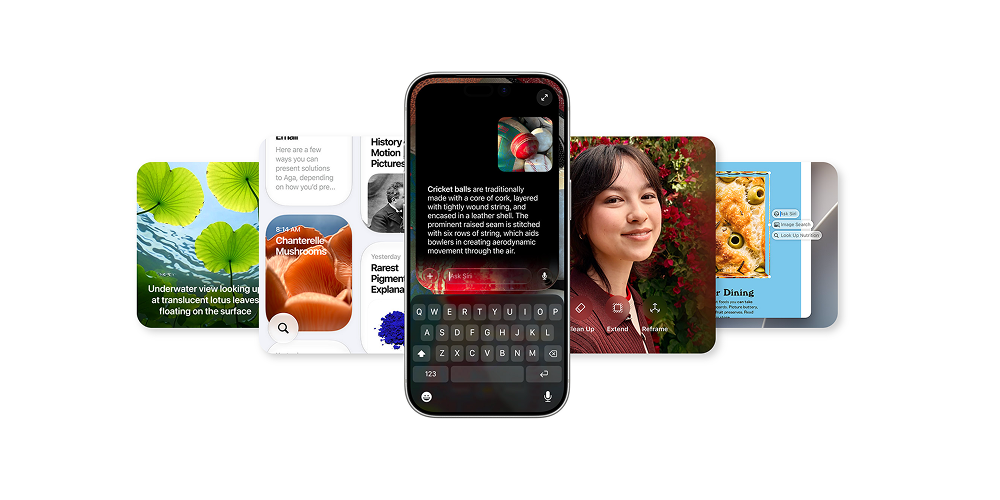
Abstract
The emergence of large language models has fundamentally altered expectations surrounding digital assistants. Systems such as ChatGPT, Gemini, Claude, and Copilot have transformed artificial intelligence from a reactive tool into an active collaborator capable of reasoning, generating content, and assisting with complex tasks. In this environment, Apple's Siri—once considered a pioneer in voice assistants—gradually became viewed as technologically stagnant.
At WWDC 2026, Apple introduced a new generation of Siri built upon Apple Intelligence, representing the company's most ambitious attempt yet to redefine human-computer interaction. While many commentators have evaluated Siri primarily through the lens of model intelligence and conversational ability, such analyses risk missing the broader strategic significance of Apple's approach.
This article argues that Apple's competitive advantage does not lie in creating the most intelligent AI model. Instead, Apple is pursuing a fundamentally different vision: the creation of a context-aware personal assistant deeply integrated into a user's digital life. If successful, Siri AI may represent the beginning of a new paradigm in personal computing. One in which artificial intelligence becomes an operating system layer rather than a standalone application.
Introduction
For more than a decade, Siri occupied a curious position within the technology industry. When Apple acquired Siri in 2010 and launched it on the iPhone 4S in 2011, the product represented one of the earliest mainstream implementations of conversational computing. The vision was compelling: users could interact with technology using natural language rather than menus, buttons, and commands.
However, as the artificial intelligence landscape evolved, Siri's progress appeared to stagnate.
The arrival of large language models dramatically shifted user expectations. ChatGPT demonstrated sophisticated reasoning and writing capabilities. Google's Gemini integrated AI across search and productivity tools. Anthropic's Claude became known for nuanced analysis and extended reasoning. Meanwhile, Siri remained largely associated with timers, reminders, and basic voice commands.
The announcement of Siri AI at WWDC 2026 therefore carries significance beyond a simple product update. Apple is not merely refreshing an existing assistant. Rather, the company finally appears to be attempting a fundamental redefinition of what a digital assistant should be.
To understand the importance of this shift, one must first recognize that the AI race is not solely about intelligence. It is increasingly about context.
The Intelligence Race Versus the Context Race
Most public discussions surrounding artificial intelligence focus on intelligence itself.
Questions commonly include:
- Which model reasons better?
- Which model writes better?
- Which model performs best on benchmarks?
- Which model generates the most accurate answers?
These questions are important, but they overlook a second dimension that may ultimately prove more valuable: contextual awareness.
Consider the following question:
"What restaurant did Sarah recommend last month?"
A state-of-the-art language model may understand the question perfectly. It may possess extraordinary reasoning abilities. Yet without access to the user's personal information, it cannot answer. The limitation is not intelligence. The limitation is context.
Apple's new Siri appears designed specifically to address this challenge. Rather than focusing exclusively on becoming a more capable chatbot, Siri seeks to become a system capable of understanding a user's digital environment. This distinction is crucial.
The future of personal assistants may depend less on knowing everything about the world and more on understanding everything about the user.
Personal Context as a New Computing Primitive
One of the most significant announcements surrounding Siri AI is its ability to access and reason over personal context.
This includes information distributed across:
- Messages
- Photos
- Contacts
- Notes
- Calendar events
- Emails
- Files
Historically, this information has existed in isolated silos. A user might remember receiving a flight confirmation through email, discussing it in Messages, and saving related documents in Files. Traditional software treats these locations as separate entities.
Humans do not. Human memory naturally connects information across domains. Apple's new Siri appears to move toward a similar model.
When users ask:
"When is my mother's flight arriving?"
the assistant is not searching a single application. Instead, it is synthesizing information across multiple sources to generate an answer. This capability may appear incremental, but its implications are profound.
For the first time, personal context becomes a computational resource. Just as search engines indexed the web, Siri is effectively indexing a user's digital life.
The Strategic Importance of On-Screen Awareness
Among the most technically impressive announcements was Siri's ability to understand content currently visible on the screen. At first glance, this may appear to be a convenience feature.
In reality, it represents a significant advancement in human-computer interaction. Traditional assistants require users to explicitly define context.
For example: "Add the address from the email John sent me yesterday to my contacts."
Such instructions force users to translate visual information into language. Siri's new model changes this relationship. Users can simply say:
"Add this address to my contacts."
The assistant understands what "this" refers to because it possesses awareness of the current screen state. This seemingly minor improvement dramatically reduces interaction friction. The user no longer adapts to the computer. The computer adapts to the user. This represents one of the central goals of modern interface design.
Apple's Ecosystem Advantage
Artificial intelligence is often discussed as though all competitors operate under similar conditions. They do not.
OpenAI develops powerful models but does not control consumer hardware. Anthropic develops sophisticated reasoning systems but lacks an operating system. Google possesses extensive software infrastructure but operates within a fragmented hardware ecosystem.
Apple occupies a unique position. The company controls:
- Hardware
- Operating systems
- Application frameworks
- Cloud infrastructure
- Security architecture
- Distribution channels
Most importantly, Apple controls the environment in which AI operates. This distinction cannot be overstated.
ChatGPT exists alongside the operating system. Siri increasingly exists within the operating system. That difference may ultimately determine which assistant becomes most useful in everyday life.
Why Siri May Be More Useful Than Smarter Models
A common criticism of Apple's AI strategy is that competitors currently possess superior reasoning capabilities. This criticism is valid. Today's leading frontier models frequently outperform Apple's systems in tasks involving:
- Coding
- Research
- Writing
- Mathematical reasoning
- Long-form analysis
However, usefulness is not solely determined by intelligence. Consider a highly intelligent consultant who lacks access to your files, messages, schedule, and applications.
Now consider a moderately intelligent assistant with complete access to those resources. In many everyday scenarios, the latter may prove more valuable. The average user spends less time solving abstract reasoning problems than managing appointments, communications, reminders, files, and information.
Apple appears to understand this reality. Its strategy prioritizes utility over benchmark performance.
Whether that strategy succeeds remains uncertain, but it is strategically coherent.
The Philosophy of Safe Automation
Another noteworthy aspect of Siri AI is Apple's apparent restraint. Recent demonstrations from competing companies have emphasized increasingly autonomous agents capable of purchasing products, making reservations, and executing complex workflows with minimal supervision.
Apple's demonstrations were comparatively conservative. Rather than purchasing concert tickets automatically, Siri might simply identify an event and add it to the calendar. This approach may appear less ambitious. Yet it reflects a deeper philosophical difference. Automation introduces risk. Every action delegated to AI carries the possibility of misunderstanding, hallucination, or unintended consequences.
Apple appears to be prioritizing trust over autonomy. This aligns with the company's historical preference for reliability, predictability, and user control.
Whether consumers ultimately prefer this approach remains an open question.
The Password Demonstration: A Glimpse Into the Future
If it works as demonstrated, one of the most underrated announcements was Apple's AI-powered password management.
When Siri detects a compromised password, it can navigate to the website, generate a stronger credential, update the account, and securely store the new password. It is a simple feature, but it solves a real problem that most people face and rarely take the time to address.
What stood out to me is that this isn't AI generating content or participating in a conversation. It is AI accomplishing something useful.
For the past few years, the industry has been dominated by increasingly ambitious predictions about what AI will become. Companies have rushed to add AI to products, often without first asking whether it genuinely improves the experience. The result has been countless features that sound impressive but provide limited real-world value.
Apple's approach appears different. Rather than using AI for its own sake, the company seems focused on reducing friction in everyday tasks. Finding information, understanding context, creating automations, and managing passwords are not flashy demonstrations, but they are practical applications that make technology more useful.
That is why this feature resonated with me. It represents AI being used where it matters most. Not to impress users, but to help them. The future value of AI may not emerge from what assistants can say. It may emerge from what assistants can accomplish.
Challenges and Limitations
Despite its promise, Siri AI faces significant challenges. First, Apple must demonstrate reliability at scale. Previous Apple Intelligence announcements experienced delays, creating skepticism among users and developers. Second, third-party application integration remains uncertain.
Many users rely on:
- Google Calendar
- Spotify
- TickTick
- Notion
The success of Siri will depend on how effectively it operates beyond Apple's native ecosystem. Third, conversational intelligence still matters.
Even if Siri becomes the most context-aware assistant available, users will continue comparing its reasoning abilities against ChatGPT, Claude, and Gemini. Apple cannot ignore this dimension indefinitely.
Conclusion
The most common mistake when evaluating Siri AI is comparing it directly to ChatGPT. Doing so misunderstands Apple's objective. ChatGPT seeks to become the world's most capable conversational intelligence. Apple appears to be pursuing a different goal: creating the world's most capable personal assistant. The distinction is subtle but profound. One system attempts to understand the world's information. The other attempts to understand your information.
If Apple succeeds, Siri AI will not win because it is the smartest model. It will win because it possesses something no competitor can easily replicate: deep integration with the devices, applications, and personal context that define modern digital life. The future of artificial intelligence may not belong solely to the model that knows the most. It may belong to the assistant that knows the user best. Viewed through that lens, Siri AI is not merely another AI announcement. It is Apple's attempt to redefine the next era of personal computing.
Explore & Blog
Latest Posts
Thoughts, experiments, and insights from my journey building products and exploring technology.
Technology, Business, Retail
One of those things that should be fixed immediately.
Sulav Jung Hamal — 2026/03/12
Computer Science
An In-Depth Exploration of the Branch and Bound Algorithm
Sulav Jung Hamal — 2024/08/20